Application brief
Identify hospitality, workplace, residential, cultural or transport interior context; traffic; furniture or track geometry; light; cleaning; installation and replacement expectations.
A compact list for interior teams aligning samples, methods and production evidence.
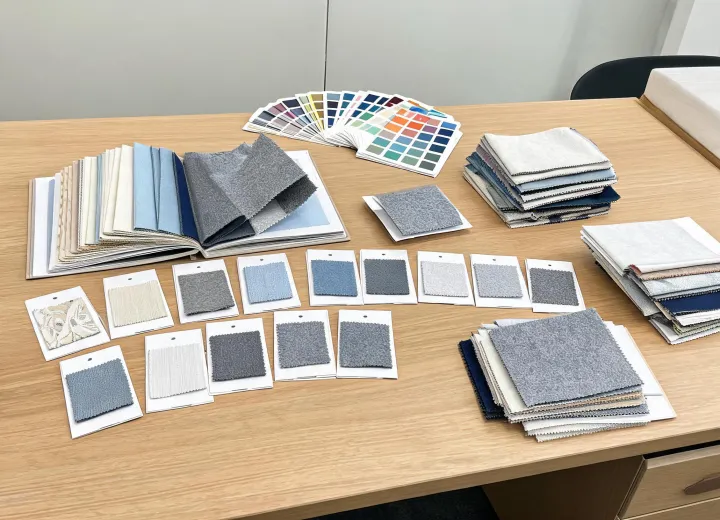
Identify hospitality, workplace, residential, cultural or transport interior context; traffic; furniture or track geometry; light; cleaning; installation and replacement expectations.
Record fiber content, yarn, weave, nominal GSM, usable width, repeat, color, backing, finish and tolerance. A collection name alone does not define the supplied cloth.
Use a memo sample for texture and color, larger length for drape and repeat, upholstered mock-up for seams and curvature, or production material for lot acceptance. Each supports a different decision.
Link Martindale, Wyzenbeek, pilling, rubbing, light, flame or dimensional claims to the selected method, conditioning, specimen, units and pass level. Results from different abrasion methods are not directly interchangeable.
Distinguish a textile's airflow or absorption contribution from the tested curtain fullness, air gap, backing, mounting and room. Material data cannot establish every installed acoustic result.
Connect approved shade, construction, width, repeat, inspection, reports, accepted deviations and lot identity. Changes in fiber, dye, finish, backing or route can require renewed approval.
Commercial feasibility includes sample length, custom color minimum, usable width, pattern repeat, production quantity, test timing, packaging and destination. Flame-retardant, acoustic or environmental language remains limited to the applicable construction and evidence.
Installation review also records furniture curvature, seam and foam; curtain fullness, air gap, lining and track; or panel backing, substrate and mounting. These variables can change appearance, acoustic behavior and durability after the material leaves the roll.
Before production, the team checks the shade standard under the agreed light source, directionality, repeat alignment, width, finish and lot continuity. Reports for another color, backing or treatment are not assumed to cover the ordered construction. A custom development proceeds only after MOQ, sample route, test responsibility and lead-time dependencies are explicit.
State the application, installation, method and production need.